
Beyond the Dashboard: How to Turn Raw Access Risk Analysis (ARA) Data into Bulletproof Audit Evidence
Organizations generate thousands of access-risk records every month, but very few know how to convert that information into evidence that can withstand a rigorous audit. While dashboards provide visibility into risks, auditors expect something much deeper—a complete trail showing how risks were identified, assessed, approved, mitigated, and continuously monitored.
Whether your organization uses SAP GRC Access Control or another governance platform, the ability to transform raw Access Risk Analysis (ARA) data into structured audit evidence can significantly reduce audit observations and improve compliance maturity.
Definition Box
What is Access Risk Analysis (ARA)?
Access Risk Analysis (ARA) is a capability within SAP GRC Access Control that identifies and evaluates user access risks such as Segregation of Duties (SoD) conflicts, critical access, and sensitive authorizations. It compares assigned roles and permissions against predefined risk rules, helping organizations detect compliance violations before they result in fraud, operational errors, or regulatory issues.
Beyond identifying risks, ARA provides the data required to document mitigation controls, approval workflows, and monitoring activities—making it a foundational component of audit readiness.
Quick Facts: Access Risk Analysis at a Glance
| Topic | Key Information |
|---|---|
| Primary Purpose | Identify Segregation of Duties (SoD) and critical access risks |
| SAP Module | SAP GRC Access Control – Access Risk Analysis |
| Typical Users | Security Administrators, GRC Consultants, Internal Auditors, Compliance Teams |
| Main Inputs | User IDs, Roles, Profiles, Authorization Objects, Risk Rules |
| Main Outputs | Risk Reports, Mitigation Assignments, Approval Records, Audit Evidence |
| Common Audit Standards | SOX, ISO 27001, COBIT, NIST, GDPR |
| Evidence Checklist | Risk Report ✓ Business Justification ✓ Approval ✓ Mitigation Control ✓ Usage Logs ✓ Review History |
When Everything Looks Fine—But Audits Still Raise Findings
Many organizations believe they are prepared for an audit because their dashboards appear healthy. Risk indicators remain within acceptable thresholds, reports are generated regularly, and access reviews are completed according to schedule.
Yet the confidence often disappears when auditors begin asking detailed questions.
Instead of reviewing high-level dashboards, auditors want to understand the story behind every significant access decision.
Typical questions include:
- Why was this access granted?
- Who approved it?
- Which business requirement justified the exception?
- What mitigating control was implemented?
- Has the control been tested recently?
- Can the organization reproduce the evidence today?
These questions expose a common gap between monitoring risks and proving that those risks are effectively managed.
A dashboard may confirm that a conflict exists or has been mitigated, but it rarely demonstrates the complete lifecycle of that decision. Without supporting documentation, approval history, and system-generated records, even a well-managed control environment can receive audit observations.
This is why modern compliance programs focus not only on visibility but also on defensible evidence.
Understanding Access Risk Analysis Beyond the Basics
Many professionals describe Access Risk Analysis simply as a tool for detecting Segregation of Duties (SoD) conflicts. While that is accurate, it only reflects one part of its value. Professionals looking to strengthen their practical understanding often complement this knowledge with SAP GRC AC Training, which provides hands-on experience in access governance, risk analysis, and compliance processes. In practice, Access Risk Analysis serves as a continuous governance mechanism that evaluates whether users possess combinations of permissions capable of introducing financial, operational, or security risks.
For example, a single employee with the ability to both create vendors and process payments could bypass essential financial controls. Similarly, unrestricted access to sensitive configuration transactions may expose an organization to unauthorized system changes.
By identifying these risks early, organizations can:
- Reduce opportunities for fraud
- Strengthen internal controls
- Meet regulatory compliance requirements
- Improve access governance
- Build reliable audit evidence
The real value of ARA emerges after risks have been identified. Every detected issue should initiate a documented process that includes review, approval, mitigation, periodic monitoring, and evidence retention. This complete chain demonstrates that risks are actively managed rather than merely reported.
Why Dashboards Alone Cannot Support an Audit
Executive dashboards are excellent for presenting trends and highlighting areas that require attention. They summarize complex information into metrics that business leaders can understand quickly.
However, dashboards are intentionally simplified.
An auditor rarely accepts a visual summary as sufficient proof because summaries omit the underlying details needed to verify compliance.
Typical dashboard limitations include:
- Missing historical access changes
- No detailed approval workflow
- Limited business context
- Lack of mitigation documentation
- No transaction-level evidence
- Insufficient traceability across review cycles
For example, a dashboard may indicate that a high-risk access conflict has been mitigated. An auditor, however, will ask for:
- The original risk report
- Role assignments
- Mitigation control documentation
- Approval records
- Evidence that the mitigating control was executed
- System logs confirming appropriate usage
Only when these elements are connected does the organization have evidence that supports audit conclusions.
Industry Statistics That Highlight the Importance of Audit Evidence
The importance of structured access governance is supported by industry research.
- Gartner has consistently identified Continuous Controls Monitoring (CCM) as a critical capability for improving compliance efficiency and reducing manual audit effort, particularly in organizations with complex ERP environments.
- According to Forrester, organizations that automate governance and compliance activities can significantly reduce time spent on manual compliance tasks while improving consistency across audit processes.
- SAP recommends continuous access governance through SAP GRC Access Control to help organizations identify access risks earlier, document mitigating controls, and maintain ongoing compliance rather than relying on periodic remediation.
These findings reinforce an important point: organizations gain the greatest value from Access Risk Analysis when it becomes part of an ongoing evidence-management process rather than a report generated only before an audit.
The Untapped Power of Raw ARA Data
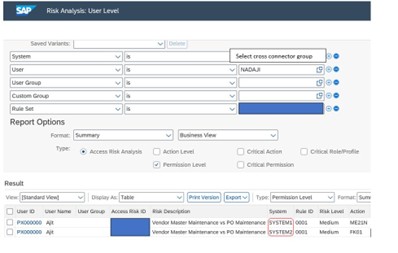
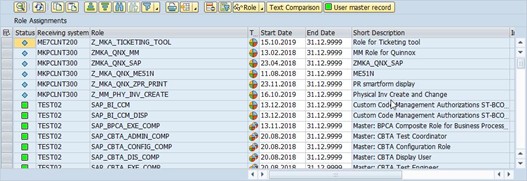
Behind every dashboard lies a much richer source of information—raw Access Risk Analysis data.
Although this data appears technical at first, it contains the evidence needed to explain every significant access decision. Instead of presenting summarized metrics, raw ARA data records the relationships between users, roles, authorizations, risks, approvals, and system activities.
Typical information available within raw ARA data includes:
- User-to-role assignments
- Segregation of Duties conflicts
- Critical transaction access
- Sensitive authorization objects
- Risk rule identifiers
- Mitigation control assignments
- Workflow approvals
- Review timestamps
- Access request history
- Change logs
- System usage records
Each of these elements contributes to a larger evidence trail.
For example, an auditor reviewing a finance user's access should be able to follow a complete sequence:
- User requested access.
- Manager approved the request.
- Risk analysis identified a potential SoD conflict.
- A mitigating control was assigned.
- Risk owner accepted responsibility.
- Periodic reviews confirmed the control remained effective.
- System logs showed authorized use only.
When these pieces are linked together, the organization moves beyond simply identifying risks—it demonstrates that those risks are governed through repeatable and verifiable processes.
That transformation—from isolated data points to connected audit evidence—is what distinguishes mature compliance programs from organizations that struggle during every audit cycle.
Bridging the Gap Between Risk Identification and Audit Proof
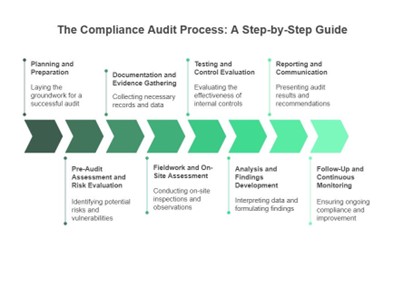
One of the biggest challenges organizations face is not identifying risks—it's proving that those risks are actually under control. Many teams rely heavily on automated tools to detect Segregation of Duties (SoD) conflicts or access violations, but when it comes to audits, simply identifying a risk is only half the job. Auditors are not just interested in what the system detects; they want to understand how the organization responds, manages, and continuously monitors those risks over time.
This is where the real transformation happens. Instead of treating Access Risk Analysis (ARA) as a one-time activity or periodic report, organizations need to start viewing it as a continuous evidence-building process. Every risk flagged should trigger a chain of actions—review, approval, mitigation, and documentation. When these steps are properly recorded and connected, they naturally form a strong audit trail.
In practical terms, this means shifting from a reactive approach to a proactive one:
- Instead of generating reports only during audits, maintain ongoing documentation
- Instead of isolated screenshots, build connected evidence stories
- Instead of manual explanations, rely on system-driven logs and approvals
Over time, this approach not only reduces audit stress but also builds confidence across teams. Audit readiness becomes a byproduct of daily operations rather than a last-minute effort. When risk identification and evidence creation go hand in hand, organizations move closer to a state where audits are no longer disruptions—but validations of a well-controlled environment.
Turning Raw ARA Data into Audit-Ready Evidence
Collecting Access Risk Analysis (ARA) data is only the first step. The real challenge lies in transforming that information into evidence that clearly demonstrates effective governance and control.
Many organizations assume that exporting ARA reports is enough to satisfy auditors. In reality, raw reports rarely provide the complete picture. Auditors need to understand not only what risk exists but also how it was evaluated, why it was accepted or mitigated, and who approved the decision.
An effective evidence package tells the complete story behind every significant access risk.
A Practical Framework for Converting ARA Data into Audit Evidence
Rather than treating ARA reports as isolated documents, organizations should connect them into a structured evidence chain.
A strong audit evidence package generally includes the following components:
| Evidence Component | Purpose |
|---|---|
| Risk Analysis Report | Identifies SoD conflicts or critical access risks |
| User and Role Mapping | Shows how the risk originated |
| Business Justification | Explains why the access is required |
| Approval Workflow | Demonstrates management authorization |
| Mitigation Control | Documents how the risk is controlled |
| Control Owner | Identifies accountability |
| Usage Logs | Confirms actual system activity |
| Periodic Review Records | Shows continuous monitoring |
| Change History | Demonstrates traceability over time |
Instead of presenting these documents individually, they should be linked together so an auditor can follow the complete lifecycle of each risk.
From Technical Data to Business Evidence
One of the biggest mistakes organizations make is presenting evidence from an IT perspective rather than a business perspective.
Consider these two examples.
Weak Evidence
User X has conflicting roles.
Mitigation assigned.
Although technically accurate, this provides little context.
Strong Evidence
User X requires temporary access to create purchase orders and approve emergency procurement during a plant shutdown. The access request was approved by the Procurement Director, reviewed by Internal Controls, mitigated through weekly transaction monitoring, and revalidated during quarterly access reviews. System logs confirm that access was used only within the approved maintenance period.
The second explanation immediately answers the questions auditors typically ask.
Building an Audit Trail Instead of an Audit Folder
Organizations often begin preparing for an audit only after receiving the audit notification.
This reactive approach usually results in:
- Searching for historical approvals
- Collecting screenshots from multiple systems
- Requesting missing documentation
- Recreating business justifications
- Validating controls under tight deadlines
A mature governance program works differently.
Evidence is created as part of everyday operations rather than during audit preparation.
Each access request automatically generates:
- Risk analysis
- Workflow approvals
- Business justification
- Mitigation assignment
- Review schedule
- System logs
By the time auditors arrive, the evidence already exists.
Audit preparation becomes an exercise in retrieval instead of reconstruction.
What High-Quality Audit Evidence Looks Like
Strong audit evidence is characterized by four essential qualities.
Complete
Every stage of the access lifecycle is documented.
Traceable
Every decision can be linked back to the original access request and associated approvals.
Consistent
Documentation follows standardized templates across departments.
Verifiable
Auditors can independently reproduce the same results using system records.
When these characteristics are present, audit discussions become faster and more productive because evidence requires less clarification.
Real-World Case Study: Improving Audit Readiness Through Structured ARA Evidence
A global manufacturing company with approximately 4,500 employees operated across 12 countries using SAP ECC, SAP S/4HANA, and SAP GRC Access Control to manage user access.
Although the company performed monthly Access Risk Analysis reviews, internal audit teams repeatedly identified documentation gaps during annual SOX compliance assessments.
Before Improvement
The organization experienced several recurring challenges:
- 286 unresolved Segregation of Duties conflicts
- Audit preparation required nearly four weeks
- Approval records stored across multiple systems
- Inconsistent documentation between regional teams
- Limited linkage between mitigation controls and supporting evidence
- 18 audit observations during the previous compliance review
Security administrators spent significant time manually gathering screenshots, workflow approvals, spreadsheets, and email conversations to explain individual access decisions.
Although controls generally existed, demonstrating their effectiveness required considerable manual effort.
Improvement Initiative
Rather than replacing existing SAP tools, the organization focused on improving evidence management.
The project team:
- Standardized evidence templates across all business units
- Linked ARA reports directly to approval workflows
- Centralized mitigation documentation
- Automated quarterly access reviews
- Retained historical review records
- Implemented continuous monitoring for critical SoD conflicts
- Created evidence packages for every high-risk access request
Results After Twelve Months
The improvements produced measurable outcomes.
| Metric | Before | After |
|---|---|---|
| Open SoD Conflicts | 286 | 47 |
| Audit Preparation Time | 4 Weeks | 6 Days |
| Manual Evidence Collection | High | Minimal |
| Audit Observations | 18 | 3 |
| Quarterly Review Completion | 71% | 98% |
Perhaps the most important improvement was confidence.
Instead of scrambling to explain historical decisions, security and compliance teams could immediately provide complete evidence packages supported by approvals, logs, mitigation records, and review history.
The audit shifted from defending documentation gaps to discussing continuous improvement opportunities.
Why Automation Has Become Essential
As organizations expand, the number of users, business roles, applications, and authorization objects grows rapidly.
Managing access governance manually becomes increasingly difficult.
Automation helps by ensuring evidence is generated consistently rather than relying on individuals to remember every required step.
Common automation capabilities include:
- Scheduled risk analysis
- Automatic SoD conflict detection
- Workflow-based approvals
- Real-time logging
- Continuous monitoring
- Automatic evidence retention
- Scheduled certification reviews
- Compliance reporting
Automation also improves consistency.
Regardless of who submits an access request, the same approval process, documentation requirements, and review standards are applied.
This reduces the likelihood of missing evidence during an audit.
Common Mistakes That Lead to Audit Findings
Many audit observations stem from relatively small documentation gaps rather than significant control failures.
Some of the most common issues include:
Treating Dashboards as Evidence
Dashboards summarize information but rarely provide sufficient supporting documentation.
Missing Historical Records
Organizations sometimes overwrite historical reports or fail to retain review evidence long enough to satisfy regulatory requirements.
Weak Business Justification
Approvals stating "Business Need" without explaining the operational requirement often generate follow-up audit questions.
Inconsistent Documentation
Different departments frequently document access requests using different formats, making evidence difficult to review.
Poor Mitigation Tracking
Assigning mitigation controls without recording ownership, review frequency, or testing results weakens the overall control environment.
Manual Evidence Collection
Gathering evidence from emails, spreadsheets, and screenshots increases both effort and the risk of missing important documentation.
Best Practices Used by High-Performing Organizations
Organizations that consistently perform well during audits generally follow several common practices.
- Perform Access Risk Analysis continuously rather than only before audits.
- Maintain standardized evidence templates across business units.
- Link approvals directly to identified risks.
- Retain historical review records.
- Review mitigation controls regularly.
- Automate evidence collection wherever possible.
- Conduct periodic internal audits before external assessments.
- Integrate security, compliance, and business teams into a single governance process.
- Review critical access assignments after organizational changes.
- Measure governance performance using defined KPIs such as unresolved SoD conflicts, review completion rates, and mitigation effectiveness.
These practices create an environment where audit readiness becomes part of daily operations rather than a last-minute compliance exercise.
The Future of Access Risk Analysis

Access Risk Analysis is evolving from a periodic compliance activity into a continuous governance capability. As organizations adopt cloud applications, hybrid ERP environments, and increasingly complex access models, managing user permissions manually becomes less practical.
Modern governance strategies emphasize continuous monitoring, automated risk detection, and real-time reporting instead of relying solely on annual or quarterly access reviews.
Artificial intelligence and machine learning are also beginning to influence access governance. These technologies can analyze user behavior, detect unusual access patterns, and identify emerging risks that traditional rule-based systems may overlook. While human oversight remains essential, intelligent automation helps organizations prioritize high-risk scenarios and respond more quickly.
Organizations are also integrating Access Risk Analysis with broader Governance, Risk, and Compliance (GRC) initiatives. By combining access governance with identity management, internal controls, and cybersecurity monitoring, businesses gain a more comprehensive view of enterprise risk.
Rather than viewing audits as isolated events, leading organizations are building environments where compliance evidence is continuously generated, reviewed, and maintained. This shift reduces audit preparation time, improves operational efficiency, and strengthens confidence in the overall control framework.
FAQs
1. What is Access Risk Analysis (ARA)?
Access Risk Analysis (ARA) is a structured process used to identify potential access-related risks within a system, especially Segregation of Duties (SoD) conflicts. It evaluates whether users have permissions that could lead to fraud or errors. ARA is commonly used in compliance frameworks to ensure secure and controlled access management.
2. Why is ARA important for audits?
ARA plays a critical role in audits because it provides visibility into who has access to what and whether that access creates risk. However, beyond identification, auditors rely on ARA data to verify controls, approvals, and mitigation strategies. Without properly structured ARA evidence, even well-managed risks can fail audit validation.
3. What makes audit evidence “bulletproof”?
Bulletproof audit evidence is evidence that is complete, consistent, traceable, and verifiable. It should clearly demonstrate the lifecycle of a risk—from identification to mitigation and review. Strong evidence also includes logs, approvals, timestamps, and business justifications that auditors can easily validate without ambiguity.
4. Can dashboards be used as audit evidence?
Dashboards are helpful for monitoring and visualization, but they are not sufficient as standalone audit evidence. Auditors require supporting documentation, logs, and historical records behind the dashboard data. Without these, dashboards only show status—not proof of control effectiveness.
5. How do auditors verify access risk controls?
Auditors typically verify access risks by reviewing user-role assignments, risk reports, mitigation controls, and system logs. They also check approval workflows and timestamps to ensure controls are consistently applied. The goal is to confirm that risks are not just identified but actively managed and monitored.
6. How can organizations improve ARA audit readiness?
Organizations can improve audit readiness by standardizing documentation, maintaining detailed logs, and ensuring all risk decisions are properly justified. Regular reviews, automation, and proper training also play a key role. A structured approach ensures that audit evidence is always ready, accurate, and defensible.
Conclusion: The Real Shift That Matters
At the heart of every successful audit lies a simple principle—clarity.
It is not enough to manage risks. It is not enough to generate reports. What truly matters is the ability to explain and prove every decision with confidence.
Dashboards will always play an important role, but they are only the starting point.
The real transformation happens when organizations move beyond dashboards and begin treating data as evidence, context as necessity, and documentation as a strategic asset.
Because in the end, audits are not about what you see on the screen.
They are about what you can stand behind and defend.
About the Author
TechBrainz Consulting
TechBrainz Consulting specializes in SAP security, GRC, and audit readiness solutions, helping organizations transform complex risk data into actionable and compliant strategies. Their expertise bridges the gap between technology, compliance, and real-world audit success.
© 2026 TechBrainz. All rights reserved. | www.techbrainz.com